When a home needs major repairs after a fire or flood, belongings often have to leave for weeks or months. That’s when the assumptions start.
Some come from past moves, some from friends, and a few from a quick search. Here are five common myths about storing belongings during a rebuild, and what’s actually true.
1. Any storage unit will do
A rented unit looks like the easy answer, and plenty of people treat a rebuild like a move. Here is how a pack-out differs from a regular move, starting with where things are kept.
A standard unit may have no climate control at all. Units that advertise it don’t always control humidity.
That matters along the Front Range, where a storage unit can sit through hot summer afternoons and hard winter freezes in the same rebuild.
The National Archives guidance on storing family papers and photographs recommends keeping temperature below 75°F and relative humidity below 65 percent. It also warns against damp basements, garages and hot attics.
Wood furniture, leather, electronics and instruments are sensitive to those conditions too. Climate-controlled contents storage built for restoration holds both temperature and humidity in a set range.
2. Damaged items can be cleaned after the rebuild
It’s tempting to box everything up and deal with it later. Smoke residue and moisture keep working inside those boxes.
Lingering odor is part of why smoke smell comes back when the weather warms up. Damp items sealed in boxes are a mold risk.
That’s why contents cleaning usually happens before storage. Items go into storage clean and dry.
Cleaning first also means the inventory records each item’s condition after treatment. If anything is questioned later, there’s a clear before and after.
3. Insurance won’t pay for storage
Many homeowners assume storage comes out of their own pocket. After a covered loss, pack-out and storage are often handled as part of the contents claim.
Coverage depends on the policy, so confirm with your adjuster before items move. It helps to understand how insurance handles contents claims.
When you call, ask three things. Is storage covered under your contents coverage, is there a dollar or time limit, and does the insurer want to approve the vendor first?
A detailed record makes approval easier. Start with the contents inventory Denver adjusters actually accept.
4. You won’t be able to find anything when it comes back
This fear comes from ordinary moves, where a box marked “kitchen misc.” vanishes into the garage for a year.
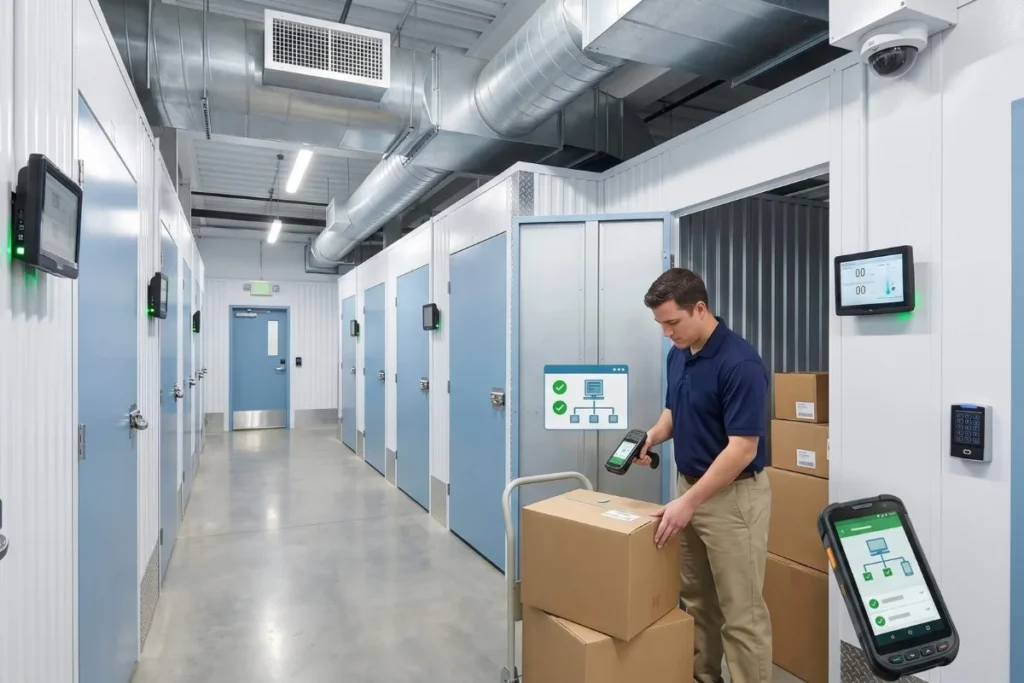
Restoration storage works differently. Items are photographed and logged by room, and often barcoded, so each one can be traced from pack-out to return.
When repairs finish, delivery and pack-back puts things back in the rooms they came from. Each item is checked against the inventory as it arrives.
Ask for that inventory before your things leave the house. Having your own copy means you can check on a specific item at any point during the rebuild.
5. Everything has to go into storage
Not every item ends up in storage. Some belongings stay with you, some are cleaned and stored, and some are documented as total losses.
Medications, documents, laptops and daily essentials should stay with the family. So should anything the kids need for school and a few weeks of clothes for each person.
Items that can’t be saved are logged for the claim rather than stored. A soaked mattress or a couch that took heavy smoke can end up on that list, and paying to store them makes little sense.
Sorting one from the other takes a trained eye. These signs your furniture can still be saved after water damage are a good place to start.
Questions to ask before anything goes into storage
The right questions up front prevent most storage surprises. Before belongings leave the house, ask the company:
- Is the facility controlled for humidity as well as temperature?
- Is each household’s property kept in its own space, away from other customers’ belongings?
- Will every item be photographed and logged, and can I get a copy of that inventory?
- Who has access to the storage area, and how is it secured?
- Will storage costs be billed to my insurance company directly?
- How will pack-back be scheduled with my contractor?
A company that answers these clearly, and in writing, is one you can trust with the things you can’t replace.
Getting storage right
Good storage during a rebuild keeps belongings stable, documented and ready to come home. A cheap unit and a pile of unlabeled boxes rarely do that.
If your rebuild is just getting started, now is the time to ask where your belongings will spend it.
ContentsPros Denver provides climate-controlled storage with item-level inventory for homeowners across the Denver metro during fire, water and mold rebuilds. Call (303) 335-0125 any time or reach out online to talk through your storage options.