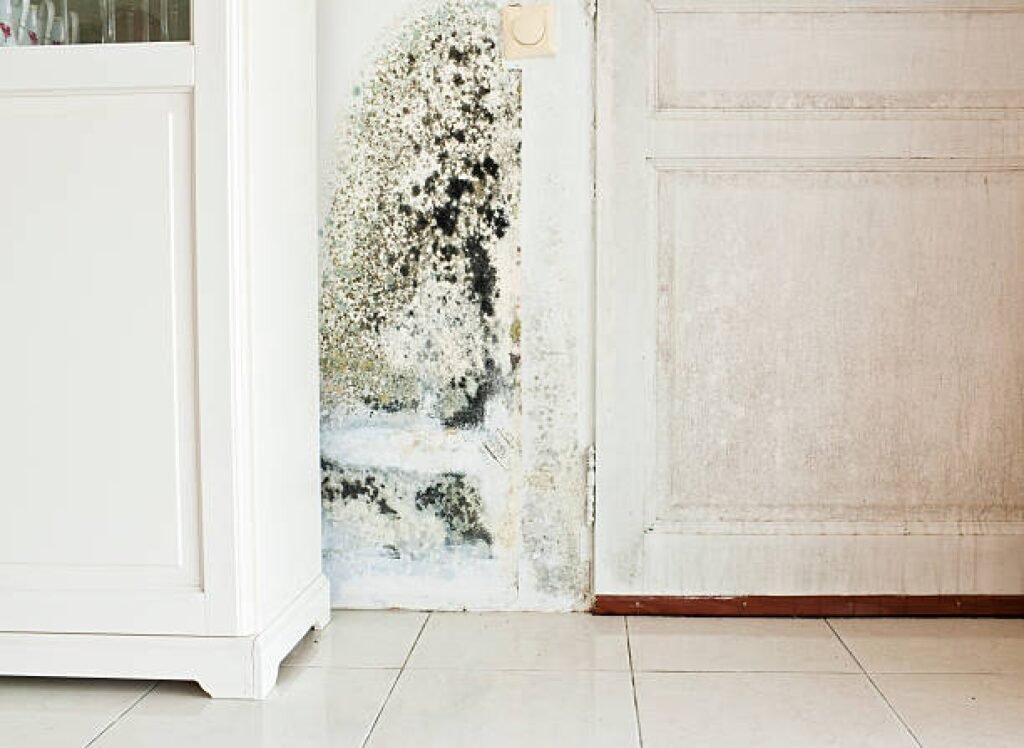
Mold turns an ordinary water loss into a sorting problem. Some belongings clean up completely and come home looking untouched.
Others are finished the moment growth reaches them, regardless of what they cost or how much they mean to the family that owns them. The line between those two outcomes is not sentiment, and it is not price.
It comes down almost entirely to what an item is made of and how long it stayed wet. Here is how that assessment actually works, what federal guidance says about salvage, and why dry air in Denver offers far less protection than homeowners assume.
Why Porosity Decides Almost Everything
Mold does not sit on a surface the way dust does. It grows into whatever it lands on, which is why wiping works perfectly on some items and accomplishes nothing on others.
Federal guidance is direct about the consequence. The EPA notes that absorbent or porous materials such as ceiling tiles and carpet may have to be thrown away if they become moldy, because mold can grow on or fill in the empty spaces and crevices of porous materials and be difficult or impossible to remove completely.
Non-porous items usually survive
Glass, metal, ceramics, and hard plastics fall here. Mold cannot penetrate them, so removing it from the surface removes the problem.
EPA guidance for plastics and metals is to vacuum or damp wipe with water and mild detergent, then allow to dry, scrubbing if necessary.
Semi-porous items depend on timing
Solid wood furniture, finished wood surfaces, and hard-surface flooring such as linoleum, ceramic tile, and vinyl sit in this category. Treated or finished wood surfaces can be cleaned with mild detergent and clean water and allowed to dry.
Expect some cosmetic compromise. The EPA is explicit that mold may cause staining and cosmetic damage, and that it may not be possible to clean an item so that its original appearance is restored.
Porous items are the hard conversations
Ceiling tiles, along with cellulose and fiberglass insulation, are treated as discard-and-replace in EPA’s water damage guidance rather than as cleaning candidates.
Upholstered furniture is more nuanced than most people assume. EPA notes it may be difficult to dry completely within 48 hours, and advises that where a piece is valuable, a restoration or water damage professional who specializes in furniture is worth consulting rather than writing the item off.
Books and papers follow their own logic. EPA guidance is to discard non-valuable items, photocopy important ones and discard the originals, or freeze and freeze-dry the pieces worth preserving.
Textiles land in a middle ground. For window drapes, EPA points back to the manufacturer’s own laundering or cleaning instructions, which is a reasonable default for most washable household fabrics.
The 24 to 48 Hour Window, and Why It Is Not a Guarantee
EPA guidance is that water-damaged areas and items should be dried within 24 to 48 hours to prevent mold growth. That window is the single largest factor in how much of a household’s belongings survive a water loss.
The agency is careful about how it frames that number. EPA states plainly that mold growth may have occurred even if materials are dried within 48 hours, that growth will not always occur after 48 hours, and that this is only a guideline.
The practical translation is that the clock matters enormously, but a moisture reading matters more. Items dried on day one can still develop growth, and items found on day three are not automatically lost.
That is precisely why removing contents from a wet environment early changes salvage outcomes so dramatically. Belongings left in place keep drawing moisture from the structure around them.
Why Dry Air in Denver Does Not Protect Your Belongings
Denver homeowners reasonably assume that low outdoor humidity keeps mold out of the conversation. It does not, because mold does not need humid air. It needs a wet surface.
A burst supply line, a failed sump pump, an ice-dammed gutter, or a slow foundation seep produces that condition no matter what the weather is doing outside.
What actually governs risk is the indoor environment. EPA recommends keeping indoor relative humidity below 60 percent, and ideally between 30 and 50 percent.
Below-grade storage compounds the problem in a specific way here. Basements are where households keep the highest concentration of porous, sentimental property: boxed photographs, books, textiles, holiday decorations, and stored furniture.
Those are the same categories least likely to survive extended contact with moisture, and the most likely to be discovered late.
What Professional Contents Remediation Involves
Mold work on personal property follows ANSI/IICRC S520, a voluntary consensus standard whose scope expressly covers the personal property contents of a building, not just the structure.
The standard takes a deliberate step away from judging a job by the visible size of the growth. Instead it defines contamination in terms of Conditions 1, 2, and 3, on the reasoning that visible square footage ignores hidden growth and settled spores.
That distinction matters for belongings more than for walls. An item can sit in a room with almost no visible mold and still carry settled contamination that a surface wipe will not address.
It is also why reaching for bleach is the wrong reflex. EPA does not recommend the use of biocides such as chlorine bleach as a routine practice during mold cleanup.
Killing mold is not the same as removing it, either. EPA notes that dead mold can still cause allergic reactions in some people, so it is not enough to simply kill it.
When it stops being a homeowner job
EPA guidance suggests that a moldy area smaller than roughly 10 square feet, about a three-foot by three-foot patch, can in most cases be handled by the homeowner. Larger areas point toward its commercial remediation guidance and professional help.
Two conditions override the size test completely. Where the water was contaminated with sewage or chemical or biological pollutants, EPA notes that OSHA requires personal protective equipment and containment, and advises consulting an experienced professional.
EPA also gives one instruction that is easy to get wrong in the first hour: do not use fans before determining that the water is clean or sanitary.
For anything of high monetary or sentimental value, EPA suggests consulting a restoration or water damage specialist and checking references before hiring.
Mistakes That Cost People Their Belongings
Running the HVAC system. EPA warns against operating a system known or suspected to be contaminated, because it can spread mold throughout the building.
Bagging damp items for later. Sealing wet porous goods into plastic keeps moisture against the material instead of removing it.
Painting or sealing over growth. EPA advises against painting or caulking moldy surfaces, and notes that paint applied over mold is likely to peel.
Testing before acting. When mold growth is visible, EPA notes that sampling is usually unnecessary. Fixing the moisture problem comes first.
Throwing items out before documenting them. Anything assessed as unsalvageable still belongs in the inventory and condition report that supports an insurance claim. Undocumented disposal is unrecoverable loss.
Sort Early, Not Late
Almost every mold salvage decision traces back to two variables: what the item is made of, and how quickly it left the wet environment. The first is fixed the day you buy the item. The second is entirely within a homeowner’s control in the first day or two.
That is why the belongings people most regret losing are usually the ones nobody looked at until the structural work was already underway.
If mold has reached your belongings anywhere in the Denver metro area, ContentsPros provides IICRC-certified assessment, decontamination, contents pack-out services and climate-controlled storage, with full documentation for your claim at every stage. Call (303) 335-0125 for a free evaluation, available 24/7, or reach out here.